
Be on the lookout of these type of action verbs that convey that words and dialogue was exchanged:
Spoke
Talked
Discussed
Argued
Had words
Emailed
These are directly admitting communication.
You should also be on the look out for words or phrases that imply conversation such as:
We met
Shot the breeze
Hooked up
These are indirectly admitting communication.
At this point we need to ask ourselves why a person would be vague about communication occurring. It could be they are attempting to distance themselves from the event. It could be because the conversation could be incriminating to themselves.
We need to ask the right questions at this point, "Who initiated the conversation?"
This serves two purposes:
1)It assumes there was a conversation, perhaps there wasn't one? If that is the case the person will immediately correct you.
2) If there is no correction, you know the person you are talking to is sensitive about the conversation and you need to pry further into the details.◦

Friday, September 4, 2009
Action Words that Convey Communication


Wednesday, September 2, 2009
Countering the Lies of Omission

Guilty people will likely practice deception by omitting information they believe with incriminate themselves.
Leaving out details is a way to mislead, and does not give the liar as much stress because technically they are not lying.
Start by getting a complete statement of the activity in question.
Things to look for are:
- Skipping over facts.
- Is there some sort of fast forwarding through time. Look for words like after, later, then, later on, eventually, finally, when, and a short time later are key words and ask for clear explanations of times that may have been glossed over.
- Fuzzy language such as "I believe" or "I think" or "Basically"? or "That is about it" is not a committed answer.
- "I cannot remember” or “I cannot recall” we have to ask ourselves they simply are describing what they prefer not to do.
- Allow the person to pause while speaking, these are signs of cognitive thinking and the pauses are important.
What to do to illicit more information:
Do not immediately directly confront when you see areas of omission, address them after the person has had a chance to tell you everything.
Do not make the mistake by going directly to the areas of greatest interest. Instead, you should fight this urge and proceed chronologically. Instead beginning with the first area of omission and moving on to the subsequent areas one by one. This avoids alerting people to specific areas of interest and incriminating area of their statement.
Systematically return to each area of missing information and seek out details by using carefully structured questions.
Say things like "Fill in the blanks" and "What did you do next?" and "Tell me everything that happened between X and Y?"
If they used fuzzy language, repeat the fuzzy language statement(s) back to them and ask for more information or clarifications.
Expect and demand micro explanations of the littlest detail.
The most seasoned investigator can get to the point where they "don't sweat the small stuff" but it is these little details that can provide insight.◦
Tuesday, September 1, 2009
The Pronoun WE and Couples

VINCENT A. SANDOVAL wrote about the power of what is being said in a portion of an article from The FBI Law Enforcement Bulletin concerning this topic.
A verbatim transcript of an interview with a man suspected of raping a known female acquaintance provides an effective illustration.
Following his description of the sex act, which he claimed was consensual, the suspect said, “I put her clothes on and, um, and she and I walked outside and said our good-byes. I gave her a hug and told her I had a good time and she talked for a minute and then I left. I walked home.”
This brief statement warranted close examination by investigators.
Among other things, they especially paid attention to the words that conveyed conversation: “she and I...said our good-byes. I...told her I had a good time and she talked for a minute and then I left.”
Of importance, the suspect never used the pronoun we to describe the two, but, instead, he said, “she and I.”
In sexual assault cases, especially those where the subject alleges that the sexual contact was consensual, investigators should listen closely for the absence of the pronoun we, which would suggest that a healthy relationship did not exist between the two individuals and, thus, increases the likelihood that the sexual contact was less then consensual.
Notice how the person you are involved with romantically refers to the two of you- this can be very telling... especially when you notice a change.◦
Sunday, August 23, 2009
Statement Analysis: What Do Suspects' Words Really Reveal?
Analysis: What Do Suspects' Words Really Reveal?
By Susan H. Adams, M.A.
Special Agent Adams teaches statement analysis as part of interviewing and interrogation courses at the FBI Academy.
Susan Smith stood outside her burgundy sedan and released the parking brake. The car plunged down the ramp into South Carolina's Long Lake, with her sons, Michael, 3, and Alexander, 14 months, strapped into their car seats. To cover her actions, Susan told police that the boys were abducted at gunpoint, launching a nationwide search for the victims and their abductor. During the investigation, Susan tearfully told reporters, "My children wanted me. They needed me. And now I can't help them."1
Yet, the boys' father, David, who believed Susan's story, tried to reassure her by saying: "They're okay. They're going to be home soon."2
Police subsequently arrested Susan for the murder of her children. She was tried and convicted and is currently serving a life sentence in a South Carolina correctional institution. Many investigators use a technique called "statement analysis" to discern the truth in statements like the ones given by Susan and David Smith. In statement analysis, investigators examine words, independent of case facts, to detect deception. They also remain alert for information omitted and question why the suspect may have done so. Investigators then analyze the clues unintentionally provided by a suspect and use this insight during the subsequent interview.
In the case of Susan Smith, by analyzing the statements made by the victims' parents, one could conclude that the father believed the boys were alive and the mother knew the children were dead. The key to this deduction lies in simple English grammar, specifically, verb tense. The father referred to the children in the present tense; the mother used the past tense. Of all times, when the "abducted" children really would need their mother, she speaks of them in the past tense, e.g., "They needed me." The children could no longer want or need her because they were no longer alive.
This article gives a brief overview of statement analysis. It examines four components of statement analysis--parts of speech (pronouns, nouns, and verbs), extraneous information, lack of conviction, and the balance of the statement. A word of caution is warranted here. There is much more to statement analysis than what is provided in this article; space limitations preclude incorporating other statement analysis components, such as the remaining parts of speech and the numerous indicators of missing information. Still, armed with the information presented in this article, investigators will be able to use these basic techniques to gain insight into a suspect prior to conducting an interview. By learning more about a suspect and determining whether that person is being deceptive, they have a much better chance of identifying the guilty party and gaining a confession.
The Technique
Statement analysis follows a two-step process. First, investigators determine what is typical of a truthful statement, referred to as the norm. They then look for any deviation from this norm. Truthful statements differ from fabricated ones in both content and quality.3
Although spoken words can be analyzed, investigators inexperienced in statement analysis will find it easier to begin by examining written statements. Investigators can make transcripts of oral statements. Or, even better, they can have suspects write a statement that details what they did from the time they woke up until the time they went to bed. This account provides a totally untainted version of the day's events and increases the validity of the analysis. Statement analysis is an aid that can be used to obtain a confession; it is not an end in itself. Therefore, whenever possible, investigators should analyze the statement before interviewing the suspect.
Important Parts Of Speech
Parts of speech form the foundation of statement analysis. To analyze a statement, investigators first need to examine the individual parts of speech, particularly pronouns, nouns, and verbs, and to establish the norm for each. If a deviation from the norm appears, they then should ask, "Why?"
Pronouns
Pronouns are parts of speech that take the place of nouns. Common examples of personal pronouns include I, me, you, he, she, we, they, and it. In statement analysis, particular attention should be given to the personal pronouns "I" and "we" and all possessive pronouns, such as my, our, your, his, her, etc. The Pronoun "I" Investigators have noted that truthful people give statements using the pronoun "I," which is first person, singular. Any deviation from this norm deserves close scrutiny, for it could be an indication that the person is not totally committed to the facts in the statement and, therefore, is not telling the whole truth.
The following written narrative begins with a clear commitment, then shows a definite lack of commitment:
"I got up at 7:00 when my alarm went off. I took a shower and got dressed. I decided to go out for breakfast. I went to the McDonald's on the corner. Met a man who lives nearby. Talked with him for a few minutes. I finished breakfast and drove to work."
The first four sentences of the statement match the norm of first person, singular--the use of the pronoun "I"; the next two sentences show deviation, because this pronoun is missing from the statement. What caused the writer to stop using the pronoun "I"? Any change in the use of pronouns is significant, and at this point, investigators should realize that the statement now becomes devoid of personal involvement. Could there be tension between the writer and the man mentioned in the statement? During the interview, investigators should draw out specifics about this relationship to determine if this part of the narrative is really true or if the writer omitted information.
I versus We
Because using the first person, singular pronoun is the norm for truthful statements, investigators need to look for a lack of the pronoun "I" and overuse of the pronoun "we," which is first person, plural.
The following version of a teen-ager's account when asked to relate what he did on Saturday evening illustrates the norm:
"I met four friends at the movie theater, watched a movie, then stopped to get something to eat with them. We had a few drinks at the bar on the way home. I stayed until just after midnight. I drove home...."
The following version of the same account, when contrasted with the above statement, indicates deviation from the norm:
"We all met at the movie theater, watched a movie, then stopped to get something to eat. We had a few drinks at the bar on the way home. We stayed until just after midnight. We each drove home...."
Because the second statement contains only "we," instead of the expected norm, which uses mostly "I," the investigator should wonder why there is no individual involvement. Perhaps the teenager hopes to conceal something or at least to avoid sole responsibility for some act.
The Pronoun "We"
In speech and the written word, linguists consider the shortest way to say something as the easiest and clearest way to communicate. The pronoun "we" is a short, clear way to describe one's self and others after proper introductions have been made. "We" also denotes togetherness; it indicates a relationship between persons. Omission of the pronoun "we" is significant, particularly when the individuals are spouses.
In the following versions of an account of events given by a husband, the first statement indicates the norm; the second one denotes deviation:
"My wife and I were invited to a neighbor's 50th birthday party. We arrived at the party a little late. The party was still in full swing when we left for home."
"My wife and I were invited to a neighbor's 50th birthday party. My wife and I arrived at the party a little late. The party was still in full swing when my wife and I left for home."
The second statement reveals distance between the husband and his wife. Once the husband introduces his wife into the statement, using the pronoun "we" is the shortest way to communicate. Yet, the husband avoids this word. Why? Perhaps because there is no "togetherness" in the relationship. If later that night the wife is murdered, and the husband, when recounting the day's activities, provides a statement devoid of the pronoun "we," investigators questioning the husband should focus on the couple's relationship. If the husband admits to marital problems, but vehemently denies any involvement in the death, investigators may clear him as a suspect, barring contrary evidence. However, if the husband responds that the couple was very close, investigators should be wary, because statement analysis reveals otherwise. A shift from "they" to "we" also is significant, for it reveals personal involvement.
In white-collar crime cases, the guilty person who denies complicity may find it difficult to keep the pronoun "we" out of a statement completely. In such instances, investigators need to search the entire written statement for "we." Then, during the interview, they should focus on the transaction described with "we." This pronoun indicates that the writer was involved.
Another example of this shift in the use of pronouns often can be found in alleged rape reports.
In the following two statements taken from rape reports, the focus is on the pronoun "we":
"He forced me into the woods," versus "We went into the woods."
The first statement represents the norm. The second statement, which contains
the pronoun "we," is a deviation from the norm. Veteran rape investigators are alert to the sudden appearance of the pronoun "we" in a victim's statement. From their experience interviewing rape victims, they have normed the rape victim to use the pronouns "he" and "I," not the pronoun "we," to describe the assailant and herself. Because the pronoun "we" denotes togetherness, the investigator reading "we" in an alleged rape statement should ask if the victim knew the assailant and if they were together before the rape occurred. If the victim denies this, there is reason to believe the statement is a fabrication.
In reports of an abduction, the use of the pronoun "we" also can indicate that the victim may not be telling the whole truth.
For example, a young woman who reported that she had been abducted at a shopping center provided the following written statement:
"I parked and started getting out of my car when a white male about 200 pounds, 6 feet tall approached me and told me to get in the car or he would hurt me. He then got in the back. I got in the front and began to drive. He told me to drive west on the highway. He asked me if I had any money. I told him no. We drove for about an hour. During that hour, he hit me repeatedly on the right side of my face. When we got to the exit, I told him I had no gas. He got mad and told me to get off the exit. We went straight off the exit for about 4-5 miles. He told me to turn down the first street on my left. We went down it about 1/4 of a mile. He told me to stop. He opened the door, put both feet out, hit me, and took off walking quickly. He took off to the east of where I was parked. After that, I took off and lost sight of him."
Investigators experienced in statement analysis would question the truthfulness of the above declaration. A true abduction statement, when normed, includes phrases like "He forced me to drive..." or "He made me get off at the exit...." Traumatized victims who are telling the truth do not use the pronoun "we" to describe assailants and themselves. Investigators concluded that the above statement revealed deception. When interviewed, the woman subsequently confessed that no abduction occurred. She was, in fact, with a man she knew.
Possessive Pronouns
Possessive pronouns, e.g., my, our, your, his, her, and their, reveal the attachment that the writer or speaker acknowledges toward a person or object. A suspect will change the pronoun, or drop the pronoun completely, when opting not to show possession or admit association with a particular object or person. For example, "I was cleaning my gun. I was putting my gun away. The gun discharged." This person, wanting to disclaim ownership of the gun that discharged (either accidentally or intentionally), stopped using the possessive pronoun "my." It no longer was his gun, under his control; it became the gun.
Another example can be found in a written statement made by a person whose home burned to the ground:
"I left my house right after breakfast to join my friends at the track for the day.... I drove back to my house, made a few phone calls, then went out to dinner with Stan Thompson.... Stan dropped me off at my house around 10:00. After I changed my clothes I left the house to spend the night at my cousin Tom's. Around midnight we heard fire engines and got up to see what was going on."
In this account, after the writer consistently used the pronoun "my" to describe his house, he omitted the pronoun the last time it was mentioned. Was it because the house burned down, and it was no longer his house? If so, then this change should have occurred much later, after midnight, when the writer learned that the house was burning. Based on the statements made, investigators should question why the switch in references occurred the last time the writer was in the house. Was it because the writer had spread accelerant on the floor of the house? Was the writer already giving up possession because he had set the fire? Just as arson investigators try to discover if valuable possessions have been removed from a house prior to a fire, those skilled in statement analysis look for the exact point at which the owner stops taking possession by failing to use the pronoun "my."
Nouns
Nouns denote persons, places, and things. Yet, nouns take on different meanings, depending on the individual. When examining the words used by a suspect, the investigator needs to note any changes, because a "change of language reflects a change in reality."4
If suspects substitute a different word after using one word consistently, they telegraph the fact that something in their lives has changed. Although language changes can occur with any part of speech, they are observed more frequently with nouns.
In a statement written by a suspect in a homicide investigation, a significant change in noun usage occurred. A young man shot his wife in the face with a shotgun. The woman died instantly, and the husband claimed the shooting was accidental. Investigators asked the man to write a statement of the events that occurred during the day of the shooting. The husband wrote a detailed statement, using the noun "wife" seven times to refer to his wife.
He then wrote: "...I lost control of the gun. I sensed that the barrel was pointing in Louise's direction and I reacted by grabbing at the gun to get it back under control. When I did this the gun discharged. It went off once and I looked over and saw blood on Louise's face."
What caused the husband to start using "Louise," his wife's first name? Did this occur at a significant point in the narrative? Prior to this point, investigators had normed the husband as using the noun "wife." When the spouse went to church with her husband, she was "my wife." When she later called to her husband, she was "my wife." But when the barrel of the gun was pointing in her direction and when there was blood on her face, two critial points in the statement, the spouse was no longer referred to as "my wife." She became Louise.
Investigators have determined that perpetrators find it nearly impossible to admit to harming a family member. The husband in this case could not admit that he had killed his wife. He removed the family relationship by substituting the name "Louise." The husband also failed to introduce Louise to the reader. After using the noun "wife" seven times, the name "Louise" suddenly appears. The reader does not know for certain who Louise is. It only can be assumed that Louise is the wife, but the husband gave no proper introduction, such as "my wife, Louise." The norm for healthy relationships is a proper, clear introduction. But in tumultuous relationships, introductions often are confusing or missing completely. The lack of a proper introduction most likely indicates a poor relationship between the husband and his wife.
Knowledge of this prior to the interview could assist investigators in uncovering the truth. Verbs Verbs express action, either in the past, present, or future. In statement analysis, the tense of the verb is of utmost importance. When analyzing statements, investigators need to concentrate on the tense of the verbs used. In a truthful statement, the use of the past tense is the norm, because by the time a person relates the event, it has already occurred.
For example, the following statement typifies the norm:
"It happened Saturday night. I went out on my back deck to water the plants. It was almost dark. A man ran out of the bushes. He came onto the deck, grabbed me and knocked me down."
The next statement shows deviation from the norm:
"It happened Saturday night. I went out on my back deck to water the plants. It was almost dark. A man runs out of the bushes. He comes onto the deck, grabs me and knocks me down."
The shift to present tense is significant, because events recalled from memory should be stated by using the past tense. The change to present tense could indicate deception. Knowing this, an investigator interviewing the victim of the second statement is forewarned that the account may be fabricated.
The use of past or present tense also is significant when referring to missing persons. In such cases, the norm is to describe the person in the present tense, as in, "I just pray that Jenny is all right." When children are missing, in the parents' hearts and minds, the children remain alive, sometimes long after the point of reason. As evidenced in the Susan Smith case, use of past tense almost immediately after the alleged abduction showed a significant deviation from the norm.
Extraneous Information
Extraneous information in a statement also can provide clues to deception. A truthful person with nothing to hide, when asked the question, "What happened," will recount the events chronologically and concisely. Any information given that does not answer this question is extraneous. People involved in crimes may feel the need to justify their actions. In such cases, the information in the statements will not follow a logical time frame or will skirt what really happened. They also may include more information than is necessary to tell the story. In such instances, investigators should scrutinize this extraneous information and question why this person felt the need to include it.
For example, in a homicide investigation involving a young woman shot by her husband, the husband told police officers that he was cleaning his gun when it accidentally discharged. Investigators then asked the husband to write a statement about his actions on the day he shot his wife. He provided a detailed statement, writing at length about the rust on his gun and a previous hunting trip. He failed, however, to describe fully his activities on this specific day. The amount of extraneous information prompted the investigator to view the husband as a suspect.
Lack Of Conviction
Another important factor in statement analysis is a person's lack of conviction. When analyzing a statement, investigators should note if the person feigns a loss of memory by repeatedly inserting "I don't remember" or "I can't recall." They also should look to see if the person hedges during the narrative by using such phrases as "I think," "I believe," "to the best of my knowledge," or "kind of." These phrases, also called qualifiers, serve to temper the action about to be described, thereby discounting the message before it even is transmitted.5
Clearly, the person giving the statement is avoiding commitment, and warning bells should ring in the investigator's ears. The following is a transcript of an oral statement of a college student who reported that a man broke into her apartment at 3:30 a.m. and raped her. A statement regarding such a traumatic experience should brim with conviction, which this statement clearly lacks.
"He grabbed me and held a knife to my throat. And when I woke up and I was, I mean I was really asleep and I didn't know what was going on, and I kind of you know I was scared and I kind of startled when I woke up, You know, You know I was startled and he, he told, he kept telling me to shut up and he asked me if I could feel the knife."
It is important to consider the phrase, "I kind of startled when I woke up." Certainly, this is not a normal reaction for a woman who awakens in the middle of the night to see an unknown man at her bed and to feel a knife at her throat. The word "terrified" more appropriately comes to mind. Using the words "kind of startled" shows a gross deviation from the expected normal reaction of terror.
Another example of lack of conviction can be found in a written statement given by a relative of a woman who mysteriously disappeared. Investigators asked the missing woman's sister-in-law to recount the activities that took place on the weekend of the disappearance. After claiming memory lapses and showing a general lack of specificity, the sister-in-law ended her statement with: "...that was about it. These were my actions on the weekend to the best I can recall." Any investigator reading the above statement should seriously question whether the events were described accurately and completely.
Balance Of The Statement
A statement given by a suspect or an alleged victim should be examined by investigators for overall balance. Statements should be more than just a series of details. They need to sound like an account of the event. A truthful statement has three parts. The first part details what was going on before the event occurred; it places the event in context. The second part describes the occurrence itself, i.e., what happened during the theft, the rape, the fire, etc. The last part tells what occurred after the event, including actions and emotions, and should be at least as long as the first part. The more balanced the three parts of the statement, the greater the probability that the statement is true.6
A statement containing the same number of lines in the before, during, and after parts, i.e., 33 1/3 percent in each part, indi-cates truth, although some degree of variation from perfect balance can be expected. If any part of a statement is incomplete or missing altogether, then the statement is probably false.
The following breakdown of a statement written by a man whose home burned shows a deviation too great from the balanced norm. The man provided a 56-line account of what happened that day, divided as follows:
BEFORE the fire: 33 lines -59.0%
DURING the fire: 16 lines - 28.5%
AFTER the fire: 7 lines - 12.5%
Investigators concluded that the above distribution indicates deception, because the three parts of the statement are clearly out of balance. The "before" section is too long and the "after" section is too short. Examination of the statement revealed that in the first part, the writer provided too much information totally unrelated to the fire. This signaled the investigators to ask themselves, "Is the writer stalling or trying to justify his actions?" Also, the statement contained sparse information on what happened after the fire and lacked any indication of emotion. There was no sign of anger, shock, or sense of loss. The writer, who showed no concern about the consequences of the fire, ultimately confessed to setting it.
Conclusion
Statements contain a wealth of information far beyond what the suspect or alleged victim intends to communicate. Fortunately, investigators can use this information to their benefit. Statement analysis provides investigators with vital background data and details about relationships to explore during the interview process. It also can determine whether the intent of the statement is to convey or to convince, that is, to convey the truth or to convince through deception.7 Armed with this knowledge, investigators can enter the interview room with increased confidence to identify the perpetrator and gain a confession.
Endnotes
The Washington Post, November 5, 1994, A15.
The Washington Post, July 26, 1995, A7.
Udo Undeutsch published this hypothesis in German in 1967. It also was reported in "The Development of Statement Reality Analysis," Credibility Assessment, ed. John C. Yuille (The Netherlands: Kluwer Academic Publishers, NATO ASI Series, 1989). The Germans generally are credited with the advancement of statement analysis for investigative purposes. German psychologists devised a system to assess the credibility of statements made by children in child abuse cases. Called criteria-based content analysis, the technique became mandated in German courts in 1954 in cases involving a disputed allegation of sexual abuse of a child.
Avinoam Sapir, Scientific Content Analysis (SCAN) (Phoenix, AZ: Laboratory of Scientific Interrogation, 1987), 52.
Walter Weintrab, Verbal Behavior in Everyday Life (New York, NY: Springer Publishing Co., 1989), 13.
Don Rabon, Investigative Discourse Analysis (Durham, NC: Carolina Academic Press, 1994), 17.
Ibid., 35.
This Article Originally Appeared in the FBI Law Enforcement Bulletin, October 1996. The FBI Law Enforcement Bulletin is a great source of information concerning interviewing and interrogations and previous issues are online at fbi.gov.◦
Sunday, July 26, 2009
Dr. Sam Sheppard Mystery Solved Through My Statement Analysis- Part Three [FINAL]

Undated File Photo: Dr. Sam Sheppard, Center, Whose Story Inspired The Popular Television Series And Movie 'The Fugitive,' Is Seen In This Undated File Photo. Proceedings Begin January 31, 2000 In The Wrongful Imprisonment Suit Against The State Of Ohio Filed By Sheppard's Son, Samuel Reese Sheppard, Jr. (Photo By Getty Images)
My comments are Bold and Italicized throughout the statement below. Interesting things said by the doctor are in RED.
At this point the statement would be marked as after the incident. 50% of the statement should be the actual incident. At this point we'd expect the statement to become more emotional because it is at this point the realization and the affect of his wife being murdered would be felt. As with other posts I will not mark all items that are normally marked during statement analysis for fear it would confuse those not familiar with the process- I will only mark sections that are interesting from a deception or guilt perspective.
A number came to me and I called, believing that this number was Mr. Houk's. I don't remember what I said to Mr. Houk. He and his wife arrived there shortly thereafter. During this period I paced back and forth somewhere in the house, relatively disoriented, not knowing what to do or where to turn. I think that I was seated at the kitchen table with my head on the table when they arrived but I may have gone into the den. I went into the den as I recall, either before or shortly after they arrived. The injury to my neck is the only severe pain that I can recall. I should say the discomfort in my neck. I didn't touch the back door on the road side to my recollection. Shortly after the Houks arrived, one of them poured half a glass of whisky as they knew where we kept a small supply of liquor and told me to drink it. I refused, since I was so groggy anyway, I was trying to recover my senses. I soon lay down on the floor. Mr. Houk and Mrs. Houk went upstairs, I am not sure of their actions. Mr. Houk called the police and the ambulance; this is in my recollection, and also my brother Richard. I am pretty sure that Mr. Houk called the police station from my study because he said "bring an ambulance"- correction - he referred to the need of an ambulance and maybe two. He also called my brother Richard. I remember my brother, Dr. Richard, speaking with me for a moment and looking at me. I believe Officer Drohnken spoke to me and asked how I had been injured. I can't recall my reply for sure. Soon thereafter I was on the floor trying to give my neck and head some support, when Dr. Stephen Sheppard examined me some time thereafter. Dr. Stephen Sheppard assisted me to his car, which I think was his station wagon, which as I recall, was just behind the Bay Village ambulance. I remember no other specific vehicles. I was transported to Bay View hospital.
I related some of the incidents to mayor Houk and one or more of the Bay Village police officers. Later in the morning I was questioned by Dr. Gerber and at another time by two officers of the Cleveland Police Department, Officers Schottke and Gareau. Later, I believe, later in the day, I was again interviewed by Officers Schottke and Gareau the presence of Chief Baton of the Bay Village Police Department. At this time I was asked to explain some things that I had no explanation for. I was shown a green bag; a green cloth bag looked like heavy cloth. I thought it was eight or ten inches long and five inches wide. I was asked to identify it. It looked to me like a bag that is used to carry motor boat tools. This was similar to the bag, if not the same bag, that accompanied my Johnson outboard motor vehicle I purchased it. I was also shown a watch that I identified as mine and questioned why there was blood on the band and crystal and why it had been found in this bag with some other articles in the weeds behind my house on the bank. I am not sure but I believe Officer Schottke said that there was also a ring and keychain, also in the bag but I don’t believe that he showed me these articles. I told him, as I recall, that I had attended stock car races two or three days previously with my wife, Otto Graham and his wife and I didn’t mention the children as I recall and was caught in a drenching rain, at which time I wore no coat or jacket but I don't think I explained this at that particular time. I since recall having inadvertently this at that particular time. I since recall having inadvertently water-skied with my watch on in the past few days and had noticed a great deal of moisture in the crystal. I had commented on this to my wife and some other people, I am not sure who. My wife planned to take the watch to Halle Brothers in the near future where she had purchased it.
A: I was subjected to a period of questioning, all of which I can’t recall at this time but was reminded of this morning and then the officers left.
Q: How long had you known your wife Marilyn?
A: Since we were in Junior High School, approximately fifteen years, or slightly more, in 1937 or 1938.
Q: From the time you met her until you were married, did you see one another quite frequently?
A: I would say yes, however, there was a period when she entered high school that I remained in Junior High School, that we saw each other very seldom for being sweethearts. In other words, we were not going together but still giving each other and liked each other…
Q: When did you first begin to keep steady company with her?
A: When we were in Junior High School, when she was in the ninth grade and I was in the eighth grade. She was a year and a half ahead of me in school. We had a so-called affair which, as I say, became inactive when she went to high school, but was revived when I reached high school and was able to assert myself. This continued throughout high school. She as I saw, was a mid-year but; she took extra courses in order to stay in high school until June of 1941. Some time during my sophomore year, I had joined a fraternity and Hi-Y and I offered her my Hi-Y pill and eventually my fraternity pin, which at that time signified going steady. During the following spring and summer she displayed the intent to have dates with other fellows. She was staying with her grandparents out at Mentor-on-the Lake. Early in the fall the following year, which was 1941, we resumed our former relationship. The following year I was a junior in high school and she went to Skidmore College. From that time on we considered ourselves engaged although it was not publicly announced und the fraternity pin was the only representation of this fact. This was a high school fraternity but a national organization and part of the laws of the fraternity insisted that only mothers, sisters and engaged sweethearts should wear the pin other than the active member himself. My freshman year in college, I joined a national college fraternity and she got that fraternity pin as soon as it was available.
Q: When and where were you married?
A: In 1945, I believe, February 21st, in Hollywood, California, First Methodist Church.
Q. Where did you take up residence after you were married?
A. In a small apartment on Sichel Street in Los Angeles.
Q. How long did you live there?
A. We lived there on that same street until the spring of 1951.
Q: During the time that you lived in California, did you and your wife, Marilyn have a misunderstanding whereby either one of you thought it best to part or separate?
A: During and following my wife's pregnancy up to approximately two years following the birth of the youngster, my wife became quite jealous. This was consistent with the termination of my didactic school work and the initiation of my work as a physician, which included contact with many women, both patients and fellow workers. This jealous reaction improved steadily until she became seemingly much more tolerant than I would consider the average female to be.
Q: Did she ever consult an attorney in reference to your domestic difficulties?
A. Not that I know of.
Q: Is it true that some members of your family communicated with her, asking her to be tolerant and reconsider her action?
A: Not that I know of, but I think that some members of her family, however, may have.
Q: Since your removal to the State of Ohio, what has been your home life?
A: Well, I considered it to be ideal in that she seemed to make it her business to be agreeable, tolerant and I should say, livable. Forever, there were times when this little jealous streak would show up but I would always reassure her and she seemed to need no further support.
Q: Did she ever directly or indirectly accuse you of having an affair with someone else?
A: She indirectly may have in questioning me about my whereabouts at various times and in the form of reassurance I often took her with me, when possible on visits to nearby cities or even the hospital.
'May have' is incorrect. She either did or did not question him. This is a sign he does not want to admit about her questioning.
Q: How would these inferences affect you?
A: Well they affected me in the direction of reassuring her what seemed to satisfy her and thereby produce a reversed action, whereby she would encourage me to be friendly with other women at social gatherings whereas at other times she might have resented the same action which she had encouraged before.
Q: Is it true, Doctor, that on several occasions when you were discussing your marital troubles, that you flew into a rage?
A: Absolutely not, never.
Absolutely is word that we always mark in statement analysis; it is a word that people use to 'prove' what the next thing they say is true- but what they say is suspect in our analysis. It is said to give emphasis to a denial or statement. Innocent people do not need to use words to plead for believability.
Q: Did you ever have an affair with a Sue Hayes?
A: I wouldn't call it an affair but we have been good friends for some time, which was known to my wife.
He is being asked a 'Yes' or 'No' question which he does not answer either yes or no; instead he gives a sentence where he can skirt directly answering the question by bending his definition of "an affair." It is also interesting that he admits that it was know to his wife, yet she only indirectly asked him questions concerning his whereabouts.
Q: Had she been employed at Bayview Hospital?
A: Yes. I don't know the exact dates. She was employed there when I initiated my work at the hospital and she terminated her work there some time last winter or early spring in 1953. She returned some time later in that year and terminated her work again at the hospital some time early in 1954. She went to California.
Q: In what capacity was she employed at the hospital?
A: Laboratory technician.
Q: While at work you had considerable contact with her didn't you?
A: Yes.
Q: To what extent?
A: She did a great deal of the technical laboratory work on all of the doctors' patients in the hospital and was the only technician practically that readily answered emergency calls on accidents or emergency surgical cases. I might also add that she was considered during her stay one of the authorities when special work was necessary.
Q: Is it true that you socialized a lot with her?
A: In the hospital, yes. I wouldn't call it socialized. We talked we became good friends.
Q: Nothing more than good friends?
A: No.
While it is a strong 'No' it is interesting that he admits to something in other places. Once again he is bending his definition of friends.
Q: What was the occasion for you purchasing a wrist watch for her?
A: She was in California at the time. I was there in March of 1954 and I had asked her with some of her friends to accompany me with a group of doctors and wives to a dinner, at which time or during the evening she lost her wrist watch. I paid the check for the dinner which, incidentally amounted to more than the wrist watch was worth and knowing this she could not afford to purchase another one, I purchased one for her which was consistent with the one that she had lost, in price range.
Q: Did your wife Marilyn know that you were contemplating purchasing this wrist watch or did she know immediately thereafter?
A: My wife didn't know of this until in casually discussing the trip some time during our trip home, that is, me and my wife, or after we had reached home shortly, at which time she became some what upset, failing to understand the intent. I wish to add, I told her of this voluntarily.
Q. Do you own a Jaguar Sport car?
A: Yes.
Q: Where did you purchase it?
A: I purchased it from M.G. Motors, which was at that time located on Lorain Road and has since been moved to Detroit Road.
Q: Do you recall the salesman name that negotiated the transaction?
A.: The only real salesman is the boss and that is Mr. Robert Lossman.
Q: Did you have occasion to meet his wife, Julle Lossman?
A: I took care of her as a patient about a year and a half ago when they were involved in an accident.
Q: Did you become very well acquainted with her?
A: As a doctor-patient relationship, yes.
Q: Now, is it true that a very close friendship resulted from this meeting?
A: I would say a close friendship with both the husband and the wife.
Q: Isn't it a fact that it developed into a love affair?
A. No, not on my part certainly.
As you will see from the below line of questioning that once again he is bending his definition of 'love affair' and perhaps this answer was 'true' because he never felt love on his part.
Q: Of your own knowledge, do you know whether or not there had been a discussion between Mrs. Lossman and her husband and you and your wife Marilyn that there had been such an affair existing between you and Mrs. Lossman?
A: That is difficult to answer. My wife and I were present at a time when Mr. Lossman and his wife discussed some of their marital problems. He at this time did mention the belief that she had shown particular like to me. We merely attempted to act as referees, my wife and I.
Once again a yes or no is all that is required.
Q. How did this affect your wife Marilyn?
A: She thereafter felt that it would be best that we not arrange frequent social affairs with the Lossman's and I agreed.
Q: How long ago was it that you decided not to see the Lossman's so frequently?
A. That was last summer in 1953 after the middle of the summer.
Q: Isn't it a fact that you have contacted Mrs. Lossman by telephone since then?
A: I never contacted Mrs. Lossman by telephone. She contacted me always in regard to some medical problem in regard to her little girl or herself. I saw Mr. Lossman frequently at the car agency and I saw them both infrequently at gatherings of the Sports Car Club, which is it club that I am not very active in but attend functions of occasionally here in the city.
Q: Isn't it a fact that you dated Julle Lossman on several occasions?
A: Absolutely not. I know there was some rumor to that effect but it is not true.
Q: Did your wife Marilyn know of this rumor?
A: Yes.
Q: How did it affect her?
A: She made it known to me and I reassured her and agreed that we should minimize our social contacts with the Lossman's and that was all there was to it. She had no particular objections as long as we kept it on a very infrequent basis.
This is interesting, he is referring to social contacts. This is slightly different than the other occasion where they agreed to minimize social contact. 'Which was known to my wife' above when discussing a different woman, can lead to confusion as to the intent of the sentence.
Q: Since this agreement with Marilyn about the contacts with the Lossman's, did your wife Marilyn show any coldness toward you?
A: No.
Q: Your home life was like an average normal couple's, had no bickerings or any petty quarrels?
A: No, because she respected my decisions on all matters.
Q: Directing your attention to the night of July 3d, 1954, at which time your wife was murdered, are you directly or indirectly involved in this crime?
A: Absolutely not.
Q: Do you know of any reason why someone else would take her life?
A: Possibly.
Q: Will you state the possibility?
A. Well, I don't know but I have heard of individuals who are maniac enough that when they start something, an act like that, it becomes a compulsion, a means of satisfaction like the ordinary man has from an orgasm or something of that nature. She has spurned lovers, potential lovers.
Beware of the speech. What follows is always important.
Q. How many of those potential lovers did she have?
A: Three that I know of and I am pretty sure, more. I am certain that there wore more.
Three is called a liars number. When people make things up they are more likely to make up the number three. While he could be telling the truth, it warrants further investigation and confirmation. With the next question it appears there was follow up and the individual names were left out of the signed statement.
Q: Have you told the police about these three and revealed their identity?
A. Yes.
Q: The night of July 3rd, 1954, when you reached the top of the stairs, after you heard Marilyn's outcries, you say you saw someone standing beside the bed occupied by your wife, were they standing or stooping over the bed?
A: I don't recall seeing anything from the head of the stairs, it happened so rapidly, it must have been when I entered the room and I don't know whether they were standing or stopping.
Stopping what? If it was beating or sexual assaulting (by the way the body was found) he would have heard something upon approaching the room.
Q: Immediately upon entering this room, did you have an opportunity to make some examination of your wife?
A: No.
Q: Why?
A: Because as I told you, I seemed to be immediately engaged in grappling, with someone.
Q: Do you know what portion of the body of this person you were grappling with that you had hold of?
You can tell the detective also picked up on my same concerns I had stated in previous posts, he understands that things concerning the struggles are not adding up in his statment.
A: I don't recall holding any portion of the body in the bedroom.
Q: You stated that you were assaulted from behind when you entered the room or immediately thereafter?
A: I felt that I was engaged from a direction somewhere within 180 degrees in front of me and you seemingly were struck from behind as I stated above.
For this to occur there would have to be two intruders, which there was not.
By Detective Robert Schottke:
Q: At the time you were assaulted on the beach, what was the condition as to light or darkness?
A: As I related before to Mr. Rossbach, it was just lighter than dark, it was not as dark as darkest night. There was a light seemingly starting, about the best way I can put it, as though daylight was just barely beginning.
Frustration is showing. Investigators will ask the same question over and over again, rephrasing it, attempting to elicit more information. This is a sensitive question to the doctor.
Q: At the time when you and this man were tussling or fighting on the beach, about how many feet of beach was there?
A: I don't know.
Once again, in his statement above he was very clear concerning his position when he awoke. The doctor has made a mistake with this part of the story that the detectives are attempting to bring forth. It is likely related to the north wind, high water, and no signs of a struggle. North winds on Lake Erie are not long lasting without bad storms, to wake up in the water would be unlikely. Without knowing the shape of the beach, position of the boat house, etc. it is hard to determine the exact nature of their questions and his answers.
Q: At the time when you were fighting with this man, could you feel any water in which you were fighting?
A: I can't say for sure but it seemed like the bench was firm, as though it had been washed over and packed somewhat.
Q: At the time when you woke up, will you explain your position on the beach as to this retaining wall, how many feet you were from this retaining wall?
A: I don't know, I can't say, but I think I can say that I was between the easterly and of that retaining wall and the steps, but I cannot say how far I was north-south wise.
Q: At the time when you woke up on the beach, will you tell us as to the condition of the wind and the waves?
A: It seemed that it was somewhat windy and the waves were moderately high. I’ll say too high to water ski and not too high to fish, not real high but moderately high.
Q: Is there anything else that you can tell us about this, Doctor?
A: Not that I can think of now. I wanted to say that I have come here of my own free will to help you in every way that I can to solve this tragedy and I hope that you will give me the opportunity to give you any additional information when and if I shall be able to remember it or find it.
'Think of now.' is an indictator he does have more information to give, but is unwilling or chooses not to.
He is leaving the door open that there may be 'reason' to continue the converstation at a later time.
Q: Have you been treated fairly during the course of this questioning?
A: Yes, absolutely.
Q: Have you read the above statement and is it the truth?
A: Yes it is true.
This is one of those things that drive people trained in statement analysis crazy. Language is specific, and when conducting statement analysis we take it to the greatest degree. What is the object of 'IT' in the above 'Yes it is true.' The statement itself is simply a statement; it does not have the right to be true or false. The words, sentences, and answers have the right to be true or false. In many older statements this type of language is used. Today there is more clear language that more accurately states that the information contained in the statement is an accurate representation of what has occurred and happened and nothing has been left out. This allows for further questions if something is found out after the statement was taken that contradicts the statement.strong>
Signed Samuel H. Sheppard
Robert F. Sehottke, Det.
Patrick A. Gareau, Det.
Carl Rossbach, Dpty.
Arthur E. Petersilge
This statement was taken by Gertrude Bauer and concluded at 4:15 o'clock P.M. Saturday, July 10th, 1954.
End note: I was hesitant to release this because this occurred many, many decades earlier and statements this old are from a different time. Language and the way we talk changes, they were more proper. Today when we see more proper language in statement we analyze the proper parts of the statement more clearly.
Another example showing this was from a different time, is the interview of the doctor took many hours and was condensed in this statment. Since the doctor has signed the statement we have to assume words were not placed in his mouth; an innocent man would object over the smallest detail that makes him appear more guilty.
Another thing that concerns me is the effect if could have on others. All of the major players in this case are long gone at this point. This case was a major case for the time and several people were hurt as a result. I feel that time has passed to the extent that it is not widely known and public interest has long passed.
Social science and criminal investigations have changed drastically since the murder. His wife was pregnant at the time, today we understand that the father is the statistically the most likely suspect. We also know that when a loved one finds a family member murdered, if their privates are exposed, each and every time they will cover the privates to give them dignity- some have gone so far as to wash the body to erase the indignity- which did not occur here.
For more background into the doctor, click below.
http://en.wikipedia.org/wiki/Sam_Sheppard
◦
Saturday, July 25, 2009
Dr. Sam Sheppard Mystery Solved Through My Statement Analysis- Part Two

Dr. Samuel Sheppard sits at a courtroom table wearing a neck brace and sunglasses, while on trial for murder in the beating death of his wife Marilyn, Bay Village, Ohio, 1954. (Photo by Hulton Archive/Getty Images)
My comments are Bold and Italicized throughout the statement below. Interesting things said by the doctor are in RED.
In the dim light I began to come to my senses and recognized a slight reflection on a badge that I have on my wallet. I picked up the wallet and while putting it in my pocket, came to the realization that I had been struck and something was wrong. I looked at my wife, I believe I took her pulse and felt that she was gone. I believe that I thereafter instinctively or subconsciously ran into my youngster's room next door and somehow determined that he was all right, I am not sure how I determined this. After that, I thought that I heard a noise downstairs, seemingly in the front eastern portion of the house. I went down stairs as rapidly as I could, coming down the west division of the steps, I rounded the L of the living room and went toward the dining table situated on the East wall of the long front room on the lake side. I then saw a form progressing rapidly somewhere between the front door toward the lake and the screen door, or possibly slightly beyond the screen door. I pursued this form through the front door, over the porch and out the screen door. All of the doors were evidently open, down the steps to the beach house landing and then on down the steps to the beach, where I lunged or jumped and grapped him in sane manner from the back, either body or leg, it was something solid. However, I am not sure. This was beyond too steps an unknown distance but probably about ten feet. I had the feeling of twisting or choking and this terminated my consciousness.
'began' is present tense verb but they may have spoken that way in the 50s.
I think it is odd that he mentions his wallet, but does not mention if anything was missing. We have to ask us ourselves why? Is it to solidify the robbery concept? Is it to say he had a badge?
His first realization- should have been before putting his wallet is in pocket- is that he had been struck and something was wrong- the order is wrong- the realization should have been listed first.
He then states he looked at his wife- who is on the bed- there is no transition from the sitting position to being able to look at her and take her pulse.
There is no mention of how she was laid out, which is significant and shocking. There is no mention of the blood and his wife's bruises. There is no emotion, which we would expect at this point.
He 'thought' he heard a noise down stairs; you either did or didn't. These are unnecessary words which is a sign of a deceptive story.
'either body or leg' it is odd that he is unclear what he got a hold of; given that he 'lunged or jumped' and was now holding the form on the lower portion of the form's body; he states he had him from the back- how then do we transition to him having the 'feeling of twisting or choking.' The act of cutting off oxygen is not something that can occur without struggle, unless the neck is broken. Having a 'feeling' is an understatement, he should be clear.
The next thing I know I came to a very groggy recollection or being at the water's edge on my face, being wallowed back and forth by the waves. My head was toward the bank, my legs and feet were toward the water. I staggered to my feet and came slowly to some sort of sense. I don't know how long it took but I staggered up the stairs toward the house and at some time came to the realization that something was wrong and that my wife had been injured. I went back upstairs and looked at my wife and felt her and checked for a pulse on her neck and determined or thought that she was gone. I became or thought that I was disoriented and the victim of a bizarre dream and I believe I paced in and out of the room and possibly into one of the other rooms. I may have reexamined her, finally realizing that this was true. I went downstairs; I believe I went through the kitchen into my study, searching for a name, a number or what to do.
It is odd that he is so clear as to his position on the water's edge, then later states how he became disorientated.
I believe everything, he states, that happened upstairs in the house it truthful.
A doctor would have no problem determining death.
Perhaps I should have explained statement analysis a bit more in detail. Most people, even guilty ones, do not lie in their statements. They have a way of being truthful, but are able to be truthful because they bend the definitions of words and phrases; they omit important information that signals guilt. In the process of having to juggle both sides, their words trip them up.
Up to this point the police know a great deal about the victim and what she went through. Nothing the doctor has said contradicts what we can imagine happened to her from a medical perspective. In fact everything that he states here is likely to have happened, and would be seen clearly by the murder. The detail in which he interjects is from a suffering perspective, while he ignores the gruesome details- this in itself is a sign of distancing himself from the crime. He is more comfortable with telling us about her moans, perhaps he feels she deserved it?
The doctor suggests the presence of 'a form' but there is a great deal of inconsistency in regard to the form's position and subsequent struggles that render the doctor unconscious.
Both times where he lost consciousness he is unclear how it happened; it simply happened.
To be Continued...
◦
Friday, July 24, 2009
Dr. Sam Sheppard Mystery Solved Through My Statement Analysis- Part One
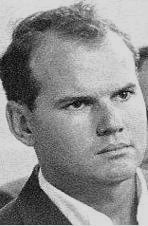
Undated File Photo: Dr. Sam Sheppard, Whose Story Inspired The Popular Television Series And Movie 'The Fugitive,' Is Seen In This Undated File Photo. Proceedings Begin January 31, 2000 In The Wrongful Imprisonment Suit Against The State Of Ohio Filed By Sheppard's Son, Samuel Reese Sheppard, Jr. (Photo By Getty Images)
My comments are Bold and Italicized throughout the statement below. Interesting things said by the doctor are in RED.
Interview at Sheriff's Office on July 10, 1954 (11:40 A.M.)
Sheriff's Office
County of Cuyahoga
Dr. Samuel H. Sheppard, you are now being questioned and may be charged with the crime of Murder at a later date. The law gives you the right to make a statement if you so desire. Anything that you may say here may be used either for or against you at the time that you are brought to trial in court. Now that you understand these facts, do you wish to make a statement telling us the truth about the facts that caused your questioning at this time?
A: Yes.
Q: Has any drug or medicine been administered to you within the past twelve hours?
A: Just about twelve hours ago I did have a grain and a half of seconal which is a short acting barbiturate and should have no effect on me at this time.
Q: Is there any doubt in your mind but what you can sit here and give us a true statement of what you know that occurred in your house on the night of July 3rd, 1954? At 28924 Lake Road, City of Bay V1l1age, Ohio?
A: I feel that at this time I can tell all that I know.
He does not answer the question with a simple Yes, instead uses the hedge words of 'at this time' and 'all that I know.' When words like this are used he is giving himself wiggle room in his mind and is saying I'm going to give you the information I want to at this time, but I might not be telling you the entire story.
Q: Proceed
A: After having a difficult morning and early afternoon at Day View Hospital where I am in charge of the accident room and the head of the Department of Neurosurgery, I made a couple of visits and then proceeded home.
'I made a couple of visits' -knowing more about the visits is an important part of the investigation. As you will learn later on in the statement, the doctor had had affairs. Years later another individual was implicated in her murder; if the doctor worked together with this person it could very well be that they met during this time. We will never know based on the information available on the Internet about this case."
I arrived home at a time later than five o'clock, realizing this because I had hoped to work in the yard with my family and found that it was too late to do so. My wife informed me that we correction - that she had planned to get together with Mr. & Mrs. Ahern that evening. We were to go to their home for a drink before dinner and then return to our home for dinner. We realized that there were a couple of business matters involving vouchers that we should record and we did this before leaving the house. We compared notes and my wife recorded the material on the Sheppard Clinic vouchers. We soon thereafter went down to the Ahern's and drove our larger car as I recall. The Ahern's were both working in the yard with their children and we instructed them not to stop but to continue with their work as we chatted. My son was playing with youngsters in the yard. Mrs. Ahern insisted on going inside shortly thereafter and Mr. Ahern instructed his young son how to continue the lawn mowing with their power mower. We shortly went into their kitchen and some type of mixed drinks were prepared. I am not absolutely clear in regard to the exact nature of this drink since we often have done this in the past and I could confuse one incident with another. Shortly thereafter, or after being there for a short time, I received a telephone call from the hospital in regard to a youngster that had broken his femur which is the thigh bone. I had received this call as a result of reporting their number to the hospital in regard to my whereabouts.
It is slightly odd to not tell the story in the order that it happened, especially for a smart man. The Doctor should have stated he had called the hospital when he actually did it, not after the fact. Why did he feel the need to explain why he got a phone call at their house? This would be worthy of a simply question if you were the interviewer, "when exactly did you call the hospital?"
The type of fracture was described to me and I decided that I had best go to the hospital and evaluate the situation. I asked Mrs. Ahern to find me a clove so that I could put this in my mouth and overcome any slight odor. I got into the car and proceeded to the hospital where I examined the youngster and the X-rays that had been taken. This youngster, as I recall, was visiting here and lives in an area near Youngstown. I believe it was the father with the youngster but I am not absolutely sure.
I hope the police followed up on his visit to the hospital and this patient. There is a great deal of fuzzy language in this statement. At this point there are several interesting statements explaining absences.
I explained that the youngster should be treated in the hospital and we hoped could soon be transported to the Youngstown hospital which I attend in the capacity of neuro-surgeon and traumatic surgeon. I then got in my car and returned toward my home, passing it since I did not see signs of the Ahern's, my wife and the children. So I returned to the Ahern’s home. Mrs. Sheppard shortly left to start the dinner. I and the Ahern's followed soon thereafter. I believe the children went with us but they may have run over by themselves. I really don't know. At our home Mr. Ahern and I chatted and the children played while the girls prepared dinner. The youngsters somehow evinced interest in my punching bag in the basement so I took them downstairs and placed a bushel basket under it so that they might reach the bag in order to hit it. I spent a moment or two with them showing them how it should be properly struck. I recall now that the children were fed in the kitchen before we ate. Shortly thereafter we four adults had dinner on the porch. It was quite breezy, the wind coming from the north generally, it may have been northeast or northwest but since the porch was cool, sweaters and jackets were in order and I put on my brown corduroy jacket. The others I am not sure of what they wore. I remember that my wife had baked pie which is my favorite dessert. The other types of food I can't truly remember.
Having lived on lake Erie myself, knowing the wind is from the north is significant. The lake is shallow for a great lake and the wind direction can drastically change water levels- as much as a 3 feet of difference from one end of the lake to another. This has significance later on in the statement.
After we had completed a leisurely dinner, Mrs. Ahern made some mention of a movie but we recognized that it was too late to attend a movie so we kiddingly suggested the television movie. The girls must have cleaned up the dishes while Mr. Ahern and I went into the front room. I am not clear on anything from dinner to the time we watched television together, but the dishes were cleared up. I think Mr. Ahem took his children home am put them to bed and my youngster must have been put to bed by my wife but I don't remember. Mrs. Ahern, my wife and I started to watch the television movie or program. I think it was a movie and as I recall now, Mr. Ahern sat over in the northwest corner of the room, that's the side toward the Lake, with a small radio turned on just loud enough for him to hear it and listen to a ball game which was in progress.
It is odd to say that 'we kiddingly suggested the television movie,' and then end up watching a television movie. It is the same as saying we kiddingly suggested going to McDonalds for our anniversary, then stating later that that is where you went.
The three of us watched the movie and Mr. Ahern reported the progress of the game a couple of times. He then either turned the game off or it had terminated and he came over to sit and watch television with us. My wife and I were sitting quite close in one chair and that is the last time I recall her in a relatively normal state, clearly. Mrs. Ahern seemed to be stimulated by our apparent affection and she sat on Mr. Ahern's lap for a short while.
Some time within the next few minutes, my wife moved to the chair I next to me because the cramped position as a result of the two of us in the chair, she said strained her back. Mrs. Ahern also moved either before or after that. We chatted as the program progressed and I became tired, relatively drowsy. I moved to the couch in the living room, situated on the west wall of the staircase and the east wall of the L portion of the living room which protrudes to the road. I lay down with my head toward the television in a prone position, holding my head and watching television. The television is on the north side of the room. My head was nearer the television set than my feet. It was toward the television set. There may have been a pilled helping to hold my head. I evidently because very drowsy and fell asleep. I recall wearing summer cord trousers, a white T shirt moccasin type loafers with no shoe strings, I am not sure of' the socks. I don't know whether I had removed my brown corduroy coat that I had put on earlier, or whether I did at this time or not. The next thing that I recall very hazily, my wife partially awoke me in some manner and I think she notified me that she was going to bed.
At this point I mark the statement as everything happening up to this point is events before the incident. When analyzing statements it is important to know this information because 25% of the statement should be events leading to the incident.
One thing to note, up to this point I have not marked all the words that I normally would (which I have done in a Word document) because there are so many fuzzy and unclear recollections that it would have confused those who are unfamiliar with statement analysis.
It is interesting to note how there is clear detail concerning them watching television, but so much unclear information concerning other events leading up to that point.
I eventually continued to sleep. The next thing I recall was hearing her cry out or scream. At this time I was on the couch. I think that she cried or screamed my name once or twice, during which time I ran upstairs, thinking that she might be having a reaction similar to convulsions that she had had in the early days of her pregnancy. I charged into our room and saw a form with a light garment, I believe.
In the previous paragraph he states 'my wife partially awoke me,' and then he states he 'eventually continued to sleep' which logically is an untruth- he was either woken up by her or partially awaken- this unclear language is an area of concern.
He recalls hearing her cry out or scream. During the rest of the paragraph he begins using fuzzy language. Fuzzy language is an indication of making up a story.
Also, many first statements out of eventual confessors start out, "I heard the gun, then looked down and saw him bleeding" while truthful... the part omitted from the statement is "I pulled the trigger, heard the gun, then looked down and saw him bleeding"- even the murderer will hear the gun...
It is interesting that he does not remember if she cried out or screamed- most would remember their perception of what they heard when something like that occurred.
CRY is also a strange choice of words. If you are trying to signal for help you literally do not cry. A more appropriate action performed by his wife would be she "screamed out?"
Anyone in the room when she was being beaten- which lead to her murder- would hear screams, calling out of the person's name who was assaulting her if this person is known to her, and crying.
'...saw a form with a light garment, I believe.' is an important part of the investigation. It is important to know where the light was coming from, because in the next paragraph he allows himself to be struck from behind- also there was a lamp missing from the room, if we could ask him it would be important to attempt to place the lamp in the room before he is eventually knocked unconscious or was the form lit from the hallway. It is thought that the lamp was used to beat her.
At the same time grappling with something or someone. During this short period I could hear loud moans or groaning sounds and noises. I was struck down. It seems like I was hit from behind somehow but had I grappled this individual from in front or generally in front of me. I was apparently knocked out. The next thing I know I was gathering my senses while coming to a sitting position next to the bed, my feet toward the hallway.
Someone would know if they were 'grappling with an inanimate object or a person.
In the previous paragraph he says 'a form' and below he switched back and forth again- even using the more personal 'he' pronoun. 'Something or someone' is odd in a statement- someone who fought with another would not say 'something.'
Then he says, 'During this short period I could hear loud moans or groaning sounds and noises'- once again logically this is not adding completely up. If someone is struggling with another for a short time would you be able to hear both loud moans or groaning sounds- groaning sounds are generally not "short" and not as loud as moans.
The way he describes his wife's sounds is how she would sound had she been badly beaten and would more likely be noticed in a longer period of time.
He is also not clear if it is his wife or someone that he is struggling with is making the noise- while we can assume that it is his wife, why does he not state that- by not clearly stating this is distancing language.
It is unclear where he is being attacked from, he clearly stated the position he watched television in, but here it is not adding up- he is entering the room so we would assume he would be heading towards the 'form' but at some point turns or twists and allows himself to be hit from the back?!?!
'...apparently knocked out' is troubling. You either are knocked out or not, if you did not see the person leave, you were knocked out. If he is lying, why would he not just say he struggled and he got away as he gave chase to the attacker- Because if he is lying he is attempting to account for time passing. Remember when people are giving false statements they are having to juggle the truth (and what they don't want to tell us) and the made up story. It is hard to do this completely, especially if you are 'speeding up' or 'slowing down' time.
To Be Continued...◦
Tuesday, July 21, 2009
High Profile Person Charged With a Crime

One of the things I have noticed over the years is how high profile people deny their charges to the media. If the person immediately begins stating things concerning attorneys and their day in court... it is not as strong of a denial as I didn't do_________ and it puts me on guard that they may be guilty.
'I'm innocent..." also does not sit well with me, cause even the guilty are innocent before the trial. I'd much rather hear I didn't do it and I will be found innocent.
If someone is stating things concerning being falsely accused and they will have their day in court and they are not showing anger or frustration- I'm on alert. If I'm innocent, falsely accused, having to pay attorneys, and putting my life on hold when I did nothing wrong... I'm not going to calmly accept things without putting out there the harshest denial possible.◦
Monday, July 13, 2009
When You Ask Someone a Question and they Answer with a Question?...?

It means you just asked them a sensitive question.
Let's take a look at this exchange:
Police Detective: "What do you think should be done to someone who steals mail and people's identities?"
Suspect: "“To someone who does that? What I think should be done?...”
First, the questions are asked to stall for time, they are not asked with the intention of receiving an answer. Secondly, anytime you get some sort of question it is a sensitive question. People do this to:
- It takes the "sting" out of the initial question.
- It is a way of avoiding facing the question head on.
- It is a distancing technique to separate them from the question.
Now that you see it for what it is, it accomplishes nothing but putting you on guard.
Here is another example, "Have you ever shoplifted anything in your life?"
"Who me? I would never steal from someone else."
This works for all conversations with anyone... and it is easy to pick up on.
Saturday, July 11, 2009
Lying and Contractions, what's the function...

School House Rock didn't cover contractions- they did conjunctions instead- too bad because contractions can tell us so much more when we are looking for LYING.
Take a look at these two sentences:
"I did not do it!" or "I didn't do it!"
Which one is more likely to be truthful?
Police and interviewers have long known this rule: Statistically, 60% of the people that use contractions are being truthful. The guilty want to make the NOT stand out. Thou does protest too loudly.
When I analyze transcripts of depositions and interviews using Linguistic Software this is one of the items the program pings on.◦
Tuesday, June 2, 2009
"You know I'd never do something that terrible to another human being."

If you get an answer like the above headline, to a question like, "Did you steal that old woman's purse?" You've got someone trying to pull your leg...
It is saying your too good to do that sort of thing. It is avoiding the direct question with an indirect answer. It takes the human element out of the question. The answer is distancing from the actual crime. Whenever someone abstractly denies wrong doing and they are taking the "high road" you are dealing with a liar.
Here is another one along the same lines, "Did you cheat on me with Linda?"
"I could never do something so wrong in the eyes of God..."
(whenever someone uses God be on the lookout, that is another sign, more on that in another post.)
Here is another example from the FBI Law Enforcement Bulletin:
FBI Law Enforcement Bulletin,The , July, 2001 by Joe Navarro, John R. Schafer
"The young mother leaned back and cleared her throat. Her eyes teared and her voice quivered as she explained how her baby disappeared. Her clasped hands trembled slightly and her feet pointed toward the door. Her demeanor appeared too subdued. Reluctant to call the mother a liar, the investigator asked her if she had a reason to lie. She answered, "I never lie. My mother taught me always to tell the truth." The investigator had seen and heard enough--he asked the woman to take a polygraph examination. During the postpolygraph interview, the woman confessed that she had suffocated her baby. Both her verbal and nonverbal behaviors had revealed the gruesome truth."◦
Monday, June 1, 2009
Ronald Cummings on the Today Show: Language Slip
"Where she used to reside..."
Wonder why he didn't say, "This is her room."
For more on this topic, I wrote about this when I believed there might be a shred of hope she was still alive but left out the details, click here
Kicker is, he probably didn't actually kill her, but he will be charged with a slew of things after the fact. I have viewed several interviews from different times after her "disappearance" and it is clear that he knows what happened and is protecting himself and others at this point.◦
Wednesday, May 27, 2009
“My children wanted me. They needed me. And now I can’t help them” SUSAN SMITH

Notice the tense.
Remember in your past when someone close to you died, and every so often you'd mix the tense. It is normal, we all do it. When we do it, we use the present tense, as if they are still alive.
When someone is dealing with such a high anxiety situation, they hold up all hope and do not make mistakes in tense. Using past tense assumes that they are no longer living, and subconsciously they could be telling us something. Especially hours and days after it has happened- after weeks or months a logical person may slowly come to the conclusion that they are no longer living, but I have heard mothers use the present tense years after their child has been missing. Everybody is different and needs to be evaluated in context of the situation, personality, and educational level.
In an another abduction case currently unsolved, this mistake was made in a television interview. There were other things that clearly caused suspicion, but the parent was leading the camera crew through their home for the first time since the abduction, and while on the tour the child's bedroom door was opened, you wouldn't expect a tense mistake (~this was his/her room); because after all it still IS their room?!?! RIGHT?
Tuesday, May 26, 2009
Analysis of Last Week's Lying Game

Let's take a closer look at the Liar's Game from last week. If you haven't seen it go ahead and view it by clicking here.
When I teach Television Editors and Reporters about what I do, I'm always telling them they do not need to catch every micro expression or gesture because you can always review the tape. Then I teach them how to review the tapes. One of the things I tell them to play it once at a normal speed, then once at a fast speed, then once slow speed. Why? Fast speed can show you tendency gestures, when they gesture less, and their normal gestures that becomes part of the baseline. Slower speeds can show you the leakage gestures and expressions.
What I would suggest for you to do now, is to place a piece of scotch tape right below the video timeline below, with a pen mark the starting and ending points of each statement. Watch it fast a couple of times.
Does anything stand out? It should. During the lie there is a decrease in gestures. The difference is barely noticeable when played at a normal speed, but when playing it faster it becomes obvious. Here are a couple of articles from The Journal of Nonverbal Behavior about this:
The impact of deception and suspicion on different hand movements. Caso,
Letizia; Maricchiolo, Fridanna; Bonaiuto, Marino; Vrij, Aldert; Mann, Samantha;
Journal of Nonverbal Behavior, Vol 30(1), Mar 2006. pp. 1-19. [Journal Article]
Individual differences in hand movements during deception. Vrij, Aldert;
Akehurst, Lucy; Morris, Paul; Journal of Nonverbal Behavior, Vol 21(2), Sum
1997. pp. 87-102. [Journal Article]
When you marked the timeline something else should have stood out. There is one particular statement that takes longer than the others. When people lie they tend to "explain" it more in an attempt to make it more believable. There are too many articles on this to cite just a couple- search online. I've created programs that "count" emotional words, and determine learning styles, etc. but here is the thing with computers, people are usually better and quicker than computers in this area- but more on that in another post.
Did you have trouble spotting the lie? Why this one was hard to read? Well, because it was based on a half truth.
What I want to do is put together a group of 50 really good 'The Lying Games' or statements and develop a web based application, like METT, where the barely noticeable becomes obvious because you have been trained through repetition. It is important to notice more/less gestures, and blinking, and the like. Too much I want to do, very little time.◦

 Posts
Posts

